Stumbling Over the Manger – Part 1
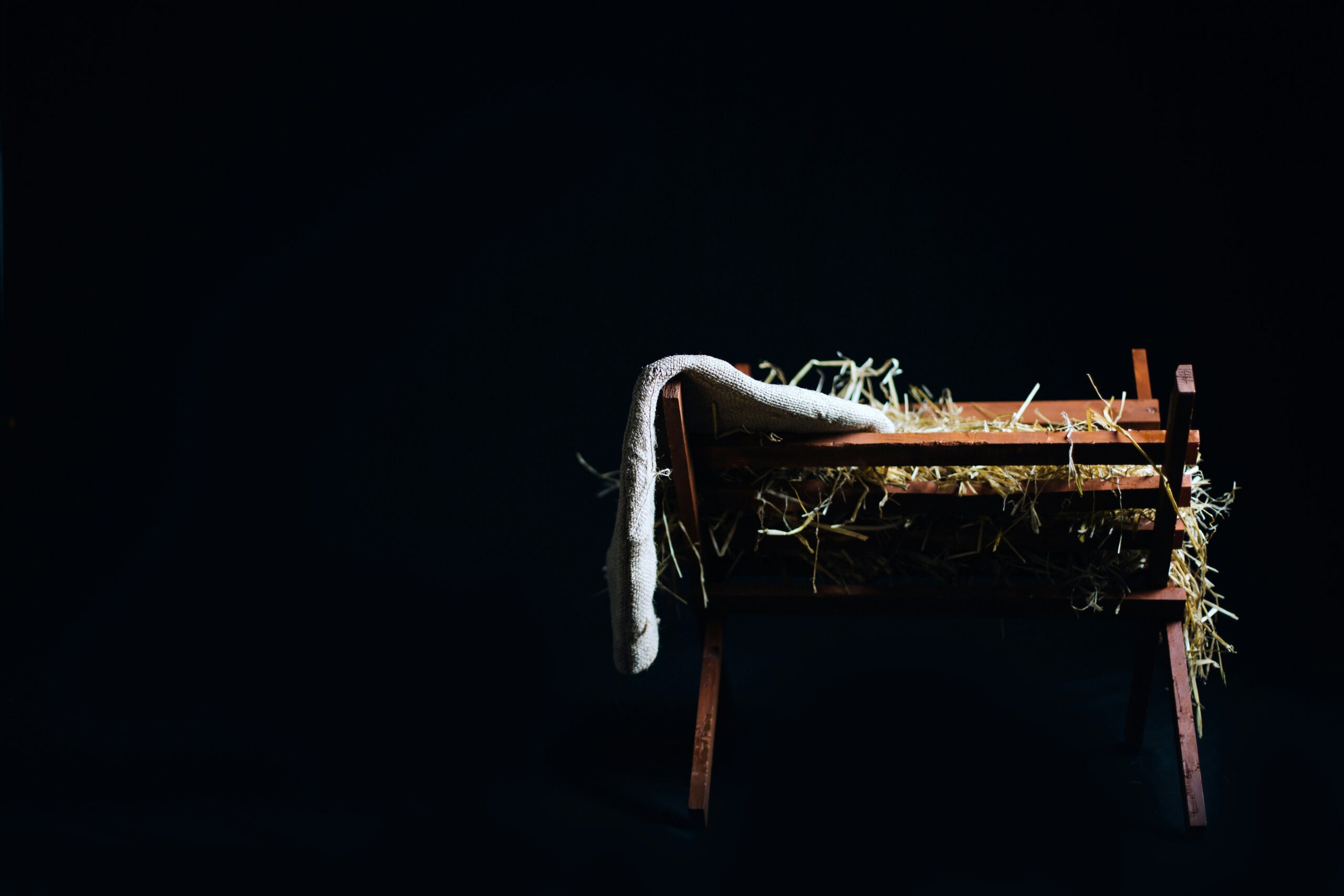
Photo by Jon Carlson on Unsplash
I am looking out over our nativity on a snowy Spokane December morning. The ensemble is replete with wiseman, shepherds, donkeys, camels, sheep, an angel, an adoring Mary and Joseph, and of course at the center, a tiny manger enfolding a baby. The scene is quiet, peaceful. The words from the Carol come to mind, “Oh come, let us adore him, Christ the King.”
Yet I am acutely aware that for so many in the world this baby Jesus does not bring quiet. He is not a source of peace. And He certainly is not a king to be adored. In fact, if we read our Bibles through the end, we know that this tiny infant grew up to be the most divisive figure in human history.
Why? Well for starters, the manger is the cosmic announcement of the coming of God’s kingdom, a kingdom that reigns in stark opposition to the kingdom of this world. For us as believers, that’s good news, the greatest news! For those who aren’t, it is the greatest stumbling block they will encounter. In my three Advent blogs, I will look at three reasons why people will stumble over the manger this Christmas.
This week’s reason starts with this truth; the birth of Jesus is an indictment of our utter sinfulness and brokenness. It signals that our situation is so desperate that we need a savior. Jesus’s birth is evidence that we are hopelessly lost and in need of God’s radical intervention on our behalf. “For God so loved the world that he gave his only begotten son, that whoever believes in him shall not perish, but will have eternal life.” (John 3:16) That’s our state. We are people perishing. We are destined for hell. We cannot save ourselves. And this truth is absolutely anathema to our self-absorbed, entitlement driven, control obsessed, arrogance-riddled world. We don’t like to be told that we are lost and need a savior.
But the offense goes even deeper. This little child will go on to tell us that the gate to the kingdom of God is narrow and few will find it. He tells us we must lose our life that we may get through it. He claims that it is only through complete and total surrender to him that we will experience life in all its fullness. The baby in a manger will expose our arrogance, confront our selfishness, and lay bare our deep sinfulness. And then he will claim that the only way to find freedom, healing, contentment, and, ultimately, salvation is through him. He is the gate, the only gate.
He can make such an audacious claim because he is the incarnate God, God in the flesh. For that reason, the incarnation, the coming of God in the flesh in the babe of Bethlehem, is a single most important moment in human history. Embracing that truth brings a total transformation of our entire being through the power of the Holy Spirit. Rejecting that truth turns the manger into a threat, something to be ignored, laughed off, explained away, or confronted in absolute distain. If you listen closely, you will hear all of these responses during this season.
You’ll hear it from liberal theologians who for decades have been trying to explain away the incarnation as a myth, a bit of fabricated romanticism, an embellishment added by later writers, or a misinterpretation of early texts. They have become too wise and learned to accept such nonsense. The Apostle Paul anticipated such pretension when he wrote “Jews demand signs and Greeks look for wisdom, but we preach Christ crucified: a stumbling block to Jews and foolishness to Gentiles, but to those whom God has called, both Jews and Greeks, Christ the power of God and the wisdom of God. For the foolishness of God is wiser than human wisdom, and the weakness of God is stronger than human strength. (1 Cor 1: 22-25)These theological elites have exchanged the truth of God for a lie, leaving them desperate to find any other possible explanation for the birth of Jesus than the one that will require them to fall to their knees in repentance. In their arrogance, they stumble over the manger.
Others will be horrified by the suggestion that they need to be saved. The manger’s message is offensive. It’s offer of grace is an affront to those who feel no need for grace and bristle at the implication that they do. As the Humanist Manifesto claims, “No deity will save us, we must save ourselves.” That mantra will keep people from embracing the truth of their sin and fallenness. Anesthetized from their own deep hunger for the life God created them to live, they will shrug off the manger and its promise of new birth. They will blindly continue their quest for a life they believe they can build totally on their own. There is nothing sadder than a hopelessly lost person who refuses to acknowledge that they don’t know where they are or where they’re going. In their refusal to accept the reality of their state, they stumble over the manger.
Finally, there will be those whose anger will cause them to stumble. Some are angry at the church. Some are angry at a God who they believe has failed them. Some are angry at the politicization of religion. Most are angry at their own deep disappointments that they blame on a deity they’ve never really known. In their anger they refuse to come to the manger, and in doing so they miss their only chance for healing, for forgiveness, and the restoration of their soul. Here in the manger lies the answer to every disappointment and the source of the true life they long for but believe they will never find. Those who come into the Christmas season angry at God and all God stands for will stumble over the manger, not realizing that everything their heart desires is waiting for them there.
One thing is for sure, the very presence of the babe of Bethlehem will be a source of deep division across our culture again this Christmas season. Our question is, will we stumble over the manger, or will we find there the source of life in all its fullness? Will we come acknowledging our deep brokenness and our desperate need for a savior?
Those who came to that first manger fell on their knees in adoration because they realized they were in the presence of God in the flesh. When Peter first encountered Jesus on the shore of Galilee, “he fell at Jesus’ knees and said, “Go away from me, Lord; I am a sinful man!” Luke 5:8.
Are we ready to come to the manger in that same humility? Can we press past our doubts and hurtful experiences and come afresh – as if it were the very first time we stood there – and consider what it means for us that God loved us so much that he came?
The babe of Bethlehem is waiting for us to come; desperate, hurting, broken, and clinging to the hope of a daring rescue by a compassionate God. He is inviting us to come with hands open, hearts broken, and spirits ready to receive all that Christ has for us.
What will the manger be for you this Christmas?