Stumbling Over the Manger – Part 3
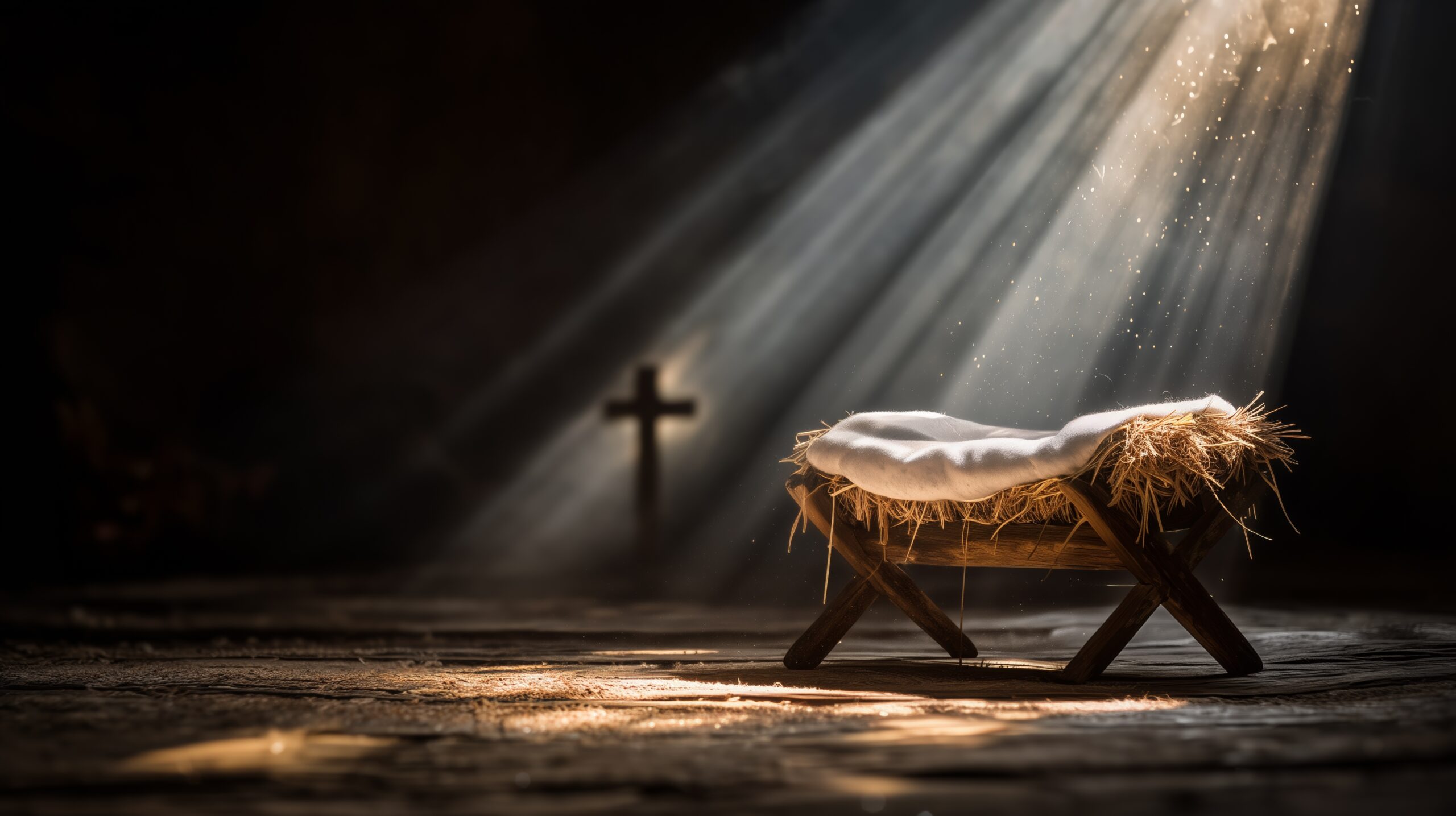
This is my final blog on the topic, ‘Stumbling over the Manger’. In the first week we looked at how people stumble over the offense of the manger because of its implication that the world needed a savior, and Jesus became that savior through the incarnation as the babe in Bethlehem. For those who don’t believe they need to be saved, the manger is an affront. Grace is not just unnecessary, it’s offensive. Last week we looked at the challenge people have of holding together the manger and the cross. They can accept a gentle Jesus meek and mild, the good moral teacher, but they reject the idea that sin required the cross. They divide the Trinity and abhor the thought of a wrathful father who tortured his son in order to be moved to forgive us. However, once we hold to a right understanding of the triune nature of creation, covenant, incarnation, the cross and salvation, the manger becomes the locus of our gracious God’s deep love for us, including the cross.
In this third week, I will briefly look at the stumbling block the manger poses because it demands a response. ‘Demands’ may be a harsh word, but we must not shrink back from it. We live in a culture that sees religion as something we can choose to believe or not. Those who choose it can further select the type of spirituality they desire, the interpretation of that spirituality that most suits their senses, and the depth to which they’re willing to go in their loyalty to it. All the different options are laid out like a grand spiritual smorgasbord where each person can choose a little of this and a little of that to suit their appetite.
If it is stripped of its meaning, the manger can become just one more entrée to be selected along with others, taken in part or in whole. Stretching our metaphor, what we know from scripture is that the manger sits alone. Imagine it on a table by itself with a sign over it, “If you choose this entrée, you must forsake everything else on the smorgasbord.” The exclusivity of the gospel is the intolerable truth that will cause so many to stumble over the manger this year.
But the offense goes even deeper. The truth of the incarnation is that God has assumed all humanity in this one magnificent act of becoming flesh. Scripture tells us that this little baby would bear the sins of the whole world. Hebrews attests, “For this reason he had to be made like them, fully human in every way, in order that he might become a merciful and faithful high priest in service to God, and that he might make atonement for the sins of the people.” (Hebrews 2:17) The Bible is unequivocal on both the breadth of the atonement and the reality that many will reject it. Christ died for the sins of the whole world. It is this all-inclusive nature of the incarnation and the atonement that poses such a challenge to those who would like to choose to smile benevolently at the Nativity, pat baby Jesus on the head and walk away confident in their right to select from other options on the spiritual smorgasbord. They can try to do that, of course. And far too many will. Some will reject him outright. Some will ignore him. Some will give him lip service, but not heart space. And they will do so under the misguided assumption that their unbelief nullifies any claim Jesus has on them. When they discover the truth of the manger, it becomes a major stumbling block to them.
A fellow doctoral student at Aberdeen was sitting in the University cafeteria one day and began chatting with a fellow student, and Asian woman who was doing her PhD in molecular biology. She asked him what he was studying, and when he responded that he was in theology, she smiled and gave the smorgasbord reply. It went something like this, “I’m glad that works for you, but I’ve chosen not to believe in God and all religion.” My friend reported later that, without even thinking, he blurted out, “Well, you may not have chosen God, but it doesn’t change the fact that God has already chosen you.” She was shocked, but before she could respond he continued, “When Jesus came to earth, he took on your humanity, lived the life you cannot live, died in your place and covered all of your sins with his blood. He chose all of this for you, and all he asks of you is that you accept that it’s already been done for you, all you have to do is believe it. Isn’t that great news?”
Well, it was not. She nearly screamed, “Don’t tell me that!” My colleague had shattered her belief that by choosing not to believe in God, she could extricate herself from God’s love for her. What caused her to stumble was her realization that her not choosing God did not negate his already having chosen her. It stripped from her the ability to turn Christ’s all-embracing atonement into her personal preference. It is true that she could continue to reject him – she could do it until death, and through death into eternity. She could even choose against God all the way to hell, but she can never undo the truth that God came for her as the babe of Bethlehem.
That’s the great stumbling block of the manger. It holds for everyone the truth that their humanity was assumed in the incarnation, their sins were taken and nailed to the cross, their forgiveness was won in the death of Jesus, and their new life in Christ is set before them as a gift through his resurrection. For a culture that worships self-determination and the sacredness of personal choice, this is anathema. If sin is ‘my claim to my right to myself’[1] then the message of the love of God in the incarnation and cross will become the source of the greatest offense. But try as they might, no one person’s unbelief can undo the truth of the incarnation and the cross any more than my unbelief in gravity can cause me suddenly to float up into the sky. Jesus said, “It is finished!” And it was, for everyone, for all time.
This means that everyone will make a response to the presence of the manger and the truth of “Immanuel, God with us.” Choosing to ignore or abdicating to choose is not an option. The manger demands a response. For those who will stumble for one of the many reasons we have discussed in this series, their rejection of the grace of Bethlehem will rob them of the life God created them to live. The manger and its message will be foolishness, irrelevant, or offensive.
For those who are being saved, the manger is the power of God unto salvation. For the brokenhearted, the hopeless, the fearful, the lost, and the downtrodden, it is the greatest possible news. And for all of us who have been saved by grace, it should inspire us to go tell it on the mountain and shout it to the world.
How might God call and empower us to share this good news this Christmas? May no one stumble over the manger because of our neglect or apathy. Instead, let’s ask God to use us today, that our life and voice may testify that the baby in Bethlehem is God’s love for everyone. He is everyone’s access to salvation, everyone’s promise of forgiveness, and everyone’s unwavering hope. Let the world hear the message ring out through us:
“Joy to the world, the Lord has come, let earth receive her king. Let every heart prepare him room, and heaven and nature sing.”
Merry Christmas!
[1] Chambers, Oswald. My Utmost for His Highest. Reading for October 5, “The Nature of Degeneration.” Grand Rapids, MI: Discovery House, 1992.