Fearfully and Wonderfully Made
By Dr. Brian Simmons

Photo by Joshua Earle on Unsplash
The ESV states: “I praise you, for I am fearfully and wonderfully made”. The phrase means that God made us with awe and reverence, setting us apart with great care and design. (Psalm 139:14)
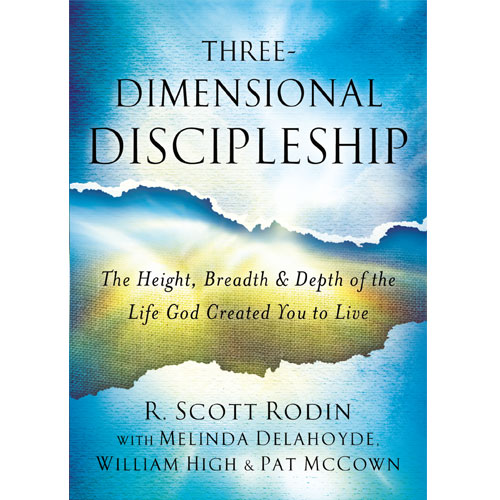
The book “Fearfully and Wonderfully Made” was written by Dr. Paul Brand in collaboration with Philip Yancey.
“Fearfully and Wonderfully Made” is both a celebration of the human body and a deep theological reflection on what it means to be made in the image of God. It combines scientific knowledge with spiritual insight, making it a unique and powerful work.
What the book is about:
- Dr. Paul Brand, a pioneering orthopedic surgeon who worked extensively with leprosy patients, uses medical and anatomical insights to explore spiritual truths.
- The book draws parallels between the parts of the human body (bones, skin, cells, blood, etc.) and the Christian community, illustrating how each part has value, function, and interdependence.
- It explores themes like:
- Unity in diversity
- Pain and healing
- The miracle of life and design
- How physical bodies reflect spiritual realities
In Fearfully and Wonderfully Made, Dr. Paul Brand and Philip Yancey use the design and function of the human body to reveal spiritual truths—especially about the nature of God, the human experience, and the Church as the Body of Christ.
And, the authors focus in their book about how deeply their work (Fearfully and Wonderfully Made) drills into the cellular level. That’s actually one of the most powerful aspects of Dr. Paul Brand’s approach: he doesn’t just use broad metaphors (like bones or blood); he goes all the way to the microscopic, cellular level to draw out spiritual truths. Here are a few examples…
Cells as the Fundamental Units of Life
- Medical insight: Every human body is made up of trillions of cells, each with a specific function—muscle cells, nerve cells, skin cells, immune cells, etc.
- Spiritual truth: Each believer is like a cell in the Body of Christ—small, seemingly insignificant alone, but essential to the life and health of the whole.
“One cell alone is microscopic, barely alive. But when joined with others—united in purpose, function, and design—it becomes life.”
- Medical insight: Cells only survive and thrive when they cooperate—sharing nutrients, removing waste, transmitting signals. Rogue or selfish cells (like cancer) threaten the whole body.
- Spiritual truth: The Church thrives when believers live in unity and mutual submission. When individuals become self-centered (like spiritual “cancer”), it can destroy community.
“Cells that ‘live for themselves’ become cancer. In the same way, spiritual life breaks down when love and service are replaced with self-interest.”
Faithful steward leaders put service over self interest. And, they seek the purposes of the Lord for all He has entrusted to their care. Only then, do they seek to move others onto His agenda for the organizations they lead within their unique, God-given roles in the body of Christ including Christian organizations and Christian community.
Cell Specialization and Purpose
- Medical insight: Cells differentiate into very specific roles—they don’t try to be everything. A red blood cell carries oxygen; a neuron transmits signals.
- Spiritual truth: God calls each believer to a specific purpose or gift. You don’t have to do it all—you just need to be faithful in your role.
“No cell tries to be the whole body. It simply does its part perfectly.”
Cell Death and Renewal
- Medical insight: Healthy cells know when to die and make room for new growth. This process (apoptosis) is critical for body health.
- Spiritual truth: Sometimes, letting go, dying to self, or releasing control is part of spiritual maturity. It clears space for new life and transformation.
“In the body, death is not always a tragedy. It is often the beginning of healing. The same is true in spiritual life.”
The Immune System and Discernment
- Medical insight: Immune cells identify and eliminate threats. They’re trained to recognize what belongs and what doesn’t.
- Spiritual truth: The Church also needs discernment—to love, protect, and heal, but also to identify false teaching or harmful behaviors.
- Spiritual leaders in Christian communities must remove cancer cells before they reproduce and destroy the body. Paul’s advice to the leaders of the church in Corinth about dealing with sin—especially in 1 Corinthians 5—was clear and strong. He urged them to confront and remove blatant sin from among them, specifically addressing a case of sexual immorality (a man was in a relationship with his father’s wife). A little yeast leavens the whole batch of dough” (v. 6). This metaphor highlights how unchecked sin can spread and corrupt the whole community. In summary, Paul’s advice to the Corinthian church was to take decisive action against unrepentant sin—not out of cruelty, but out of love for the sinner, the church, and for God’s holiness. It was about preserving the integrity and witness of the Christian community.
Interconnectedness and Communication
Medical insight: Cells are in constant communication through chemical signals and nerve pathways. One part affects the whole.
Spiritual truth: The Church must stay connected, communicate with love, and respond to one another’s needs, just like the body reacts to pain or joy throughout its systems.